
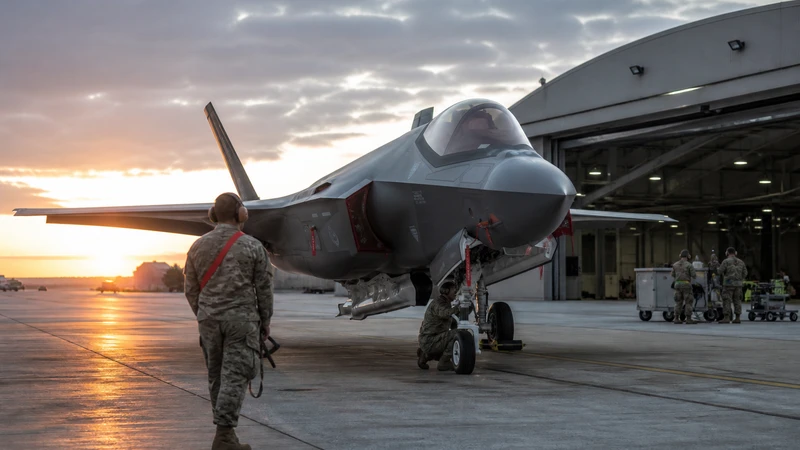
America’s Military Is Being Asked to Do More, Faster
The United States has entered one of those periods when the world begins to test the assumptions built up during more comfortable years. China is expanding its military reach in the Indo-Pacific. Russia’s war against Ukraine has reminded Europe that large-scale ground combat did not vanish with the Cold War. Iran-backed groups continue to threaten American forces and shipping lanes in the Middle East. North Korea remains armed, unpredictable, and increasingly tied to other American adversaries.
None of these challenges is entirely new. What is new is their simultaneity. The Pentagon is no longer planning for one main theater while managing lesser distractions elsewhere. It is trying to deter several dangers at once, each of which requires different weapons, different geography, and different political patience. That is the strategic problem behind the familiar phrases about military readiness and modernization.
Readiness is the unglamorous part of national defense. It means aircraft that can fly, ships that can deploy, munitions that are available, soldiers and Marines who have trained at the scale at which they may have to fight, and families who can endure the demands placed on them. Modernization is the more dramatic word: hypersonic weapons, artificial intelligence, unmanned systems, cyber capabilities, space resilience, next-generation submarines and aircraft. A serious defense policy needs both. A military that is ready but obsolete may lose tomorrow’s war. A military that is modern but unavailable may fail to prevent it.
The Industrial Base Is Now a Strategic Front
The war in Ukraine has exposed something many defense specialists already understood: America’s arsenal is not infinitely elastic. Precision munitions, air defense interceptors, artillery shells, ship repair capacity, and submarine production are not abstractions. They come from factories, skilled workers, suppliers, foundries, and long procurement chains that cannot be summoned overnight by a presidential speech.
This is where conservative realism should begin. A great power cannot outsource its security to hope, and it cannot maintain deterrence on press releases. The defense industrial base is now as much a strategic asset as any carrier strike group. If production lines are too thin, if shipyards are overburdened, if maintenance backlogs grow, then adversaries will notice. Deterrence is not just a doctrine; it is a visible fact.
The Navy’s own public shipbuilding review in 2024 found delays across several major programs, including submarines and surface ships. The details matter less than the pattern: America has ambitious plans, but the machinery for building and sustaining those plans is under strain. The Columbia-class ballistic missile submarine program, central to the nuclear deterrent, competes for shipyard capacity with the Virginia-class attack submarine program, which is crucial in any Indo-Pacific contingency. This is not a minor scheduling inconvenience. It is the kind of bottleneck that forces strategy to bow before reality.
The lesson is simple, though not easy. Congress and the executive branch must treat industrial capacity as a long-term national project. That means steadier procurement, faster contracting where possible, more predictable demand signals to industry, and a workforce strategy that makes skilled manufacturing respectable and attainable again. We have spent years talking as if the future belongs only to software. But the future also belongs to welders, machinists, engineers, electricians, and shipyard workers.
China Remains the Pacing Challenge
The Pentagon’s National Defense Strategy describes China as the central long-term challenge and Russia as an acute threat. That distinction is useful. Russia has shown both brutality and military weakness in Ukraine. China, by contrast, is building a military designed to complicate American operations across the Pacific, especially around Taiwan and the first island chain.
A conflict in the Indo-Pacific would test the United States in ways very different from recent wars in the Middle East. Distances are vast. Bases are vulnerable. Naval power, air power, undersea warfare, space assets, logistics, and long-range fires would matter enormously. The United States cannot assume it will enjoy the uncontested access it had in campaigns against weaker opponents.
That reality should shape modernization priorities. The Pentagon needs survivable communications, dispersed basing, more resilient space systems, air and missile defense, autonomous platforms that can be fielded at scale, and enough long-range munitions to sustain a fight if deterrence fails. At the same time, modernization cannot become a ritual incantation used to excuse neglect of the basics. The most advanced aircraft in the world is not a deterrent if too few are mission-capable. The most sophisticated ship cannot influence events if it is stuck in maintenance.
Ukraine, Israel, and the Question of Stockpiles
Support for Ukraine and assistance to Israel have both raised a domestic question: can the United States arm partners and preserve its own readiness at the same time? The answer should be yes, but only if Washington is willing to rebuild the production capacity that makes such a policy sustainable.
There is a conservative argument for aiding allies that does not depend on sentimentality. A world in which Russia succeeds by conquest, Iran’s proxies control sea lanes, or China concludes that America lacks staying power is a more dangerous and expensive world for Americans. Helping partners defend themselves can be a prudent way to prevent larger wars. But prudence also requires honesty about inventories and timelines. Sending weapons abroad while failing to replenish them at home is not strategy. It is deferred responsibility.
That is why supplemental funding debates should not be treated merely as foreign policy theater. They are also tests of whether Congress can connect ends and means. If America wants allies to hold the line, and if it wants its own forces ready for crisis, then munitions production and replenishment must be funded with urgency and oversight. Waste should be hunted down, but parsimony masquerading as discipline can become its own form of recklessness.
Personnel Is Part of Readiness
Modernization debates often focus on machines, but militaries are human institutions. Recruiting shortfalls in parts of the armed forces have raised legitimate concerns. The causes are complicated: a smaller share of young Americans qualify for service, civilian job markets compete for talent, trust in institutions has weakened, and military families face real burdens.
Here again, the conservative instinct should be institutional rather than merely rhetorical. Praising the troops is good; sustaining the conditions that make military service honorable and livable is better. Pay, housing, medical care, family stability, realistic training schedules, and competent leadership all matter. So does a public culture that understands military service as more than a career option. It is a vocation ordered toward sacrifice for the common good.
That language may sound old-fashioned. But nations that forget the moral dimension of service eventually discover that technology cannot fully replace courage, discipline, and trust. A drone may extend reach. It cannot create civic seriousness.
A Serious Defense Policy Requires Tradeoffs
The United States does not need panic. It does need sobriety. The temptation in Washington is to treat every defense priority as equally urgent and every program as politically protected. That is not strategy; it is accumulation. Real modernization will require choices, including retiring systems that are too costly to sustain, reforming procurement rules that slow innovation, and resisting the congressional habit of protecting local interests at the expense of military coherence.
At the same time, conservatives should resist the fantasy that America can retreat from global commitments and remain safe behind oceans that modern missiles, cyberattacks, terrorism, and economic coercion have made smaller. Restraint is a virtue when it means clear priorities and avoidance of foolish wars. It becomes a vice when it drifts into indifference.
The central task is to rebuild deterrence before deterrence fails. That means a military ready today and modern enough for tomorrow; allies confident enough to stand with us; adversaries convinced that aggression will not pay; and a political class willing to match its rhetoric with budgets, reforms, and patience.
National defense is not a separate compartment from national character. It reveals whether a country can think beyond the next election, repair what it has neglected, and accept limits without surrendering responsibility. In a more dangerous world, that may be the readiness test beneath all the others.