
Election Integrity Requires More Than Accuracy
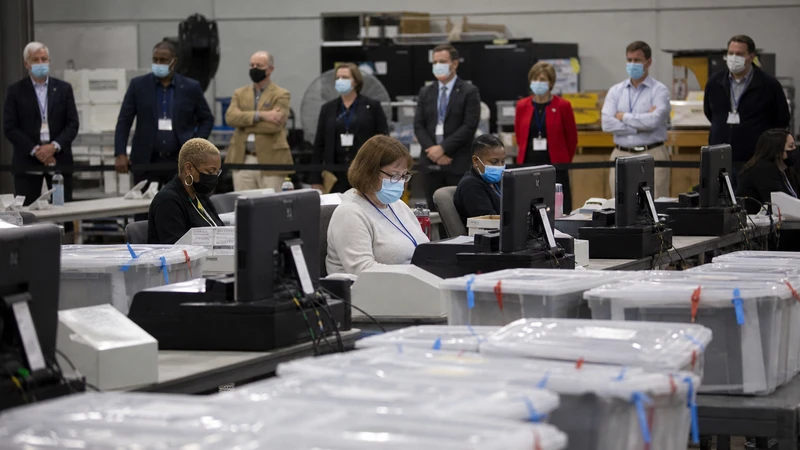
Every close election eventually arrives at the same narrow bridge: the point where ballots have been counted, disputes have been heard, and officials must certify the result. For most voters, that process remains nearly invisible. They see campaign ads, debates, election-night maps and concession speeches. They rarely see the canvass, the audit, the reconciliation of poll books, the chain-of-custody forms or the meeting where a county board signs off on the final numbers.
That invisibility is now a political problem. It is not enough for an election to be honestly run. In a low-trust country, citizens also need to understand how honest elections are verified. The answer is not to turn every canvassing room into a cable-news courtroom. But neither is it enough to tell skeptical voters to be quiet and trust the professionals.
A republic asks losers to accept defeat. That is a hard civic discipline even in calmer times. It becomes harder when the procedures that produce the final result seem mysterious, improvised or guarded by insiders speaking a language only lawyers and election administrators understand.
Audits, Recounts and Certification Are Not the Same Thing
One reason the public debate is so confused is that several different processes are often collapsed into one word: checking. But election administration has its own categories, and they matter.
A recount is usually triggered by a close margin or a candidate request, depending on state law. Its purpose is to retabulate ballots and determine whether the vote total changes.
An audit is different. It is designed to test whether the counting system worked properly. Some states use traditional post-election audits, checking a sample of precincts or machines. Others use risk-limiting audits, a statistical method that examines enough paper ballots to provide strong evidence that the reported winner really won. Colorado is the leading example of statewide use of risk-limiting audits, and several other states have used or piloted versions of the practice.
Certification is different again. It is the formal legal act by which local or state officials declare the results final. Certification does not mean every citizen is satisfied. It means the lawful process has reached its endpoint.
Confusing these steps creates trouble. If citizens think certification is supposed to be a roving investigation into every rumor on social media, they will see routine certification as a coverup. If officials treat audits as mere paperwork, they should not be surprised when voters assume the audit was cosmetic.
The Conservative Case for Transparent Procedure
There is a properly conservative way to think about election transparency. It begins with respect for institutions, but not worship of them. Institutions earn trust by behaving in public according to known rules. The county clerk, the bipartisan canvassing board, the secretary of state and the judge all have roles. The health of the system depends on each one staying within those roles.
That is why transparency should be procedural before it is theatrical. The public does not need officials performing confidence. It needs officials publishing rules, following them, preserving records and explaining deviations when they occur.
Federal law already requires retention of records and papers related to federal elections for 22 months. Many states also require pre-election logic and accuracy testing of voting equipment, public canvassing meetings and post-election checks. The Election Assistance Commission issues voluntary voting system guidelines, though states retain primary authority over election administration.
The American system is decentralized by design. That is a strength, not a defect. A single national election bureaucracy would be an inviting target for both hackers and political manipulation. But decentralization also means uneven public visibility. One county may have a clear website, livestreamed meetings and detailed audit reports. Another may have a PDF buried three clicks deep, written in jargon and posted after public attention has moved on.
What Real Transparency Should Include
Election officials do not need to disclose sensitive security details that would help bad actors. Nor should they release information that compromises ballot secrecy. But there is a large middle ground between secrecy and recklessness.
States and counties should make several basic practices routine:
- Publish audit procedures before Election Day. Voters should know in advance what kind of audit will occur, how samples will be selected, who may observe and when results will be released.
- Use paper records wherever possible. Voter-verifiable paper ballots or paper audit trails make meaningful audits possible. Software can assist elections, but public confidence ultimately rests on records that can be physically checked.
- Provide clear chain-of-custody documentation. Ballots should move through the system with logged transfers, sealed containers and bipartisan or multiperson oversight where required by law.
- Allow meaningful observation without disruption. Observers should be close enough to understand the process but not so close that they interfere with workers or compromise voter privacy.
- Explain discrepancies in plain English. Small differences between check-in records, provisional ballots, spoiled ballots and final totals can have innocent explanations. Officials should not assume the public already knows them.
- Release audit results promptly and accessibly. A spreadsheet may satisfy a legal requirement, but a short written explanation can satisfy a citizen.
None of this is revolutionary. It is the civic equivalent of turning on the lights before asking people to believe the room is clean.
The Danger of Endless Suspicion
There is, however, a second truth that conservatives should be willing to say plainly. Transparency cannot become an excuse for refusing to accept any result one dislikes. A system that permits review must also permit finality.
This is not a small matter. Constitutional government depends on losers conceding that the winner may govern. If every certification becomes provisional, every officeholder becomes illegitimate in the eyes of the losing side. That path does not lead to reform. It leads to exhaustion and, eventually, contempt for self-government itself.
The point of audits is to test outcomes, not to provide permanent employment for suspicion. The point of certification is to close the process after the lawful checks have occurred. A mature political culture can demand rigorous verification and still accept a verified result.
Federalism Needs Standards, Not Centralization
Congress has a limited but real role in this area, especially for federal elections. The Help America Vote Act created baseline requirements after the 2000 election controversy, and later reforms clarified aspects of the presidential certification process after the disputes of 2020. But the best improvements now may come less from Washington commands than from state legislatures adopting clearer audit and certification statutes.
States should resist both temptations: the temptation to nationalize everything and the temptation to leave everything vague. A good election law should tell officials what they must do, tell candidates how challenges may be brought, tell citizens what information they may see and tell everyone when the process is over.
That kind of clarity will not make our politics calm. No administrative reform can heal a country that increasingly treats the other party as an occupying force. But clear election rules can remove unnecessary fuel from the fire.
Trust Is Built Before the Crisis
The worst time to explain an audit is after a disputed election. By then, every sentence sounds like a defense brief. The better time is now, before the next crisis, when procedures can be described without reference to a particular candidate’s fate.
Election officials should invite the public into the process early. State lawmakers should fund serious audits and require usable public reporting. Party leaders should train observers to watch carefully without harassing workers. Citizens should learn the difference between a real irregularity and a viral misunderstanding.
There is a moral dimension here as well as a legal one. Democracy requires a certain humility: the willingness to believe that one’s side can lose fairly. But humility is easier when authority behaves transparently. In elections, as in most human affairs, trust is not created by demanding it. It is earned by practices sturdy enough to be seen.
If Americans are going to accept close results in the years ahead, they will need more than assurances. They will need open procedures, disciplined audits and certification rules that are firm without being opaque. Sunlight will not cure every fever in our politics. But without it, even a healthy election will look sick to half the country.