
America’s Energy Debate Is Back Where It Belongs: Security
There are certain debates in Washington that never really disappear. They only change costumes. Energy policy is one of them. In one season it is argued as a climate issue, in another as an inflation issue, in another as a foreign policy issue. But underneath all the labels sits a stubborn fact: a modern nation that cannot reliably power itself is not fully sovereign.
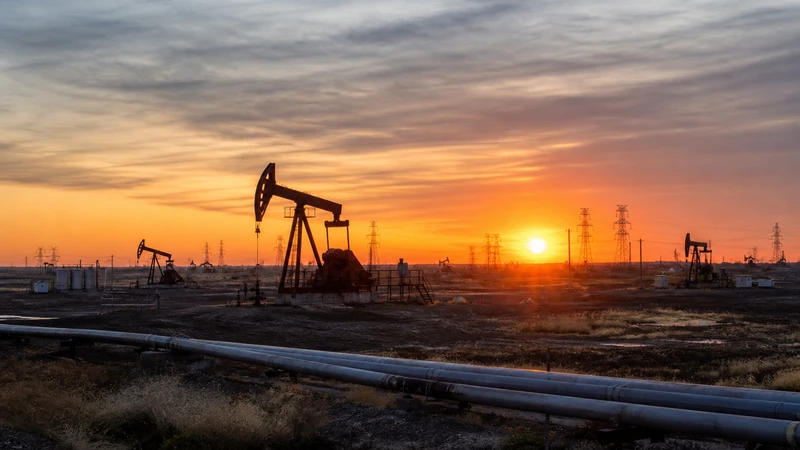
That is why domestic energy independence has returned to the center of the policy conversation. The United States is far better positioned than it was in the 1970s, when oil shocks exposed the country’s dependence on hostile or unstable foreign suppliers. The shale revolution changed the map. American oil and natural gas production rose dramatically over the past two decades, and the United States became one of the world’s leading producers of both fuels. According to the U.S. Energy Information Administration, the country has in recent years produced record levels of crude oil and has been a net exporter of total energy.
Yet the phrase “energy independence” can mislead if it is treated as a magic shield. America still imports crude oil, especially from Canada and other trading partners, because refineries are built for different grades of crude and because energy is traded in global markets. Gasoline prices in Ohio or Arizona are not sealed off from conflict in the Middle East, shipping disruptions in the Red Sea, sanctions on Russia, or production decisions by OPEC and its allies. Oil is not like tomatoes at a local farm stand. It is priced in a world market, and trouble anywhere can become pain everywhere.
Why Foreign Oil Still Matters
The conservative case for expanding domestic energy production is not that America can retreat from the world. It is that America should enter the world from a position of strength. When U.S. production rises, hostile petro-states have less leverage. Allies have more options. Consumers face a larger cushion against disruption. Presidents have fewer reasons to beg unfriendly governments for relief when prices spike.
This is not a theoretical concern. Russia’s invasion of Ukraine reminded Europe what energy dependence can cost. For years, several European countries treated cheap Russian natural gas as a commercial convenience, only to discover that pipelines can become instruments of coercion. The lesson should not be lost on Americans. Energy policy is never just energy policy. It is industrial policy, foreign policy, and national defense policy wearing a hard hat.
That does not mean every well should be drilled or every project approved without scrutiny. Conservatives should resist the caricature that prudence is weakness. Land, water, and local communities matter. So does environmental stewardship, which is not a progressive invention but a duty rooted in the old idea that inheritance must be preserved as well as enjoyed. But stewardship is not the same thing as paralysis. A permitting system that takes years to approve pipelines, transmission lines, export terminals, or mineral projects is not careful government. It is government that has forgotten how to decide.
The Permitting Problem
One of the central obstacles to American energy security is not a lack of resources but a lack of permission. Energy projects often face overlapping federal, state, and local reviews. Environmental laws such as the National Environmental Policy Act serve real purposes, but they can also be used to delay projects indefinitely. The result is a strange national contradiction: Washington announces grand plans for more energy, cleaner energy, more electric vehicles, stronger supply chains, and lower costs, while the machinery required to build those things moves at the speed of a cathedral commission.
This problem cuts across energy sources. Oil and gas producers need permits for leases, wells, pipelines, and export facilities. Renewable projects need transmission lines and access to land. Nuclear power faces high regulatory and financing hurdles, despite offering reliable carbon-free electricity. Mining projects for copper, lithium, nickel, and rare earth elements can spend years in review, even as policymakers say they want less dependence on China for critical minerals.
A serious energy independence agenda would begin with permitting reform. It would set clearer deadlines for reviews, reduce duplicative litigation, and force agencies to make timely decisions. Approval should not be automatic. But yes or no should not take a decade.
Oil, Gas, Nuclear and the Grid
The second requirement is realism about the energy mix. Oil and natural gas remain central to transportation, manufacturing, agriculture, home heating, and electricity reliability. Anyone promising to abolish them quickly is not offering policy so much as theater. At the same time, anyone pretending the energy system will never change is living in another fantasy. The question is not whether America should have fossil fuels or alternatives. The question is whether America can build an energy system that is abundant, resilient, affordable, and less dependent on adversaries.
Natural gas has helped reduce U.S. power-sector carbon emissions by replacing coal in many places, while also supporting grid reliability. Liquefied natural gas exports have given allies another source of supply. Nuclear power, though politically neglected for decades, deserves a larger role because it provides steady electricity without the intermittency of wind and solar. Renewables can contribute too, but they require transmission, storage, backup generation, and a permitting system capable of building at scale.
There is no serious path to energy security that relies on one favored technology and wishes away the rest. A country of 330 million people, with factories, farms, military bases, data centers, hospitals, and families trying to pay utility bills, needs a broad portfolio. Energy abundance is not a slogan. It is the condition that makes modern life possible.
The Strategic Petroleum Reserve Is Not a Substitute
The Strategic Petroleum Reserve was created after the energy crises of the 1970s to protect the country against severe supply disruptions. It can serve an important emergency function. But it cannot replace production, refining capacity, pipelines, and long-term investment. Drawing down reserves may ease pressure for a time, but it does not create new barrels tomorrow unless companies have confidence to invest today.
That confidence depends on stable rules. Energy companies can accept regulation. What they cannot easily plan around is a political class that alternates between demanding more supply when prices rise and discouraging investment when prices fall. If Washington wants lower prices and less reliance on foreign oil, it must send a durable signal that producing energy in America is a legitimate and necessary enterprise.
A Conservative Energy Bargain
The right policy bargain is not difficult to describe, though it is difficult to enact. Produce more at home. Build infrastructure faster. Refill emergency reserves responsibly. Encourage nuclear power. Keep environmental standards, but make them timely and intelligible. Strengthen ties with friendly suppliers such as Canada while reducing exposure to hostile regimes. Protect consumers from avoidable price shocks. And stop pretending that energy abundance and environmental care must be enemies.
The moral shape of the issue is easy to miss because energy is discussed in the language of barrels, permits, and prices. But energy is also about human dignity. High fuel and electricity costs punish working families first. Unreliable grids endanger the elderly and the poor. Dependence on foreign oil can force ugly compromises with regimes that do not share American principles. To treat energy as an afterthought is to treat all these consequences as someone else’s problem.
America does not need nostalgia for the oil shocks of the past, nor utopian promises about a frictionless green future. It needs sober confidence: the recognition that we have been given extraordinary resources, technological skill, and a continent rich enough to sustain freedom if we choose to govern wisely. Energy independence is not isolation. It is responsibility. And in an unsettled world, responsibility is a form of strength.