
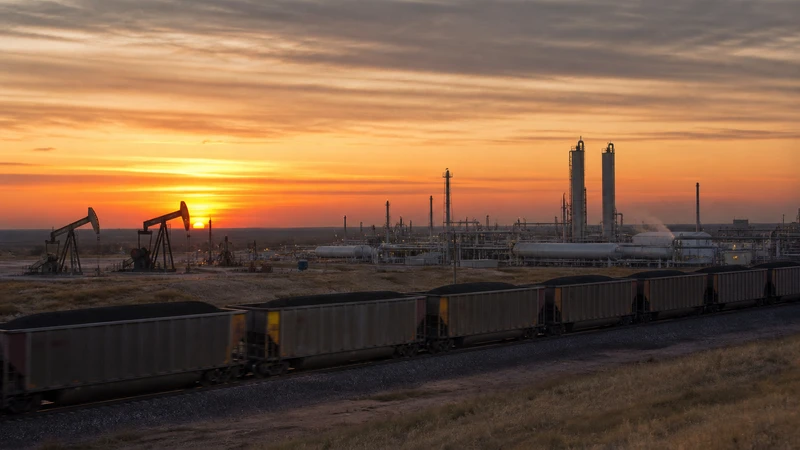
The energy debate is increasingly about permission
America has no shortage of energy. It has abundant oil and natural gas reserves, a still-significant coal base, experienced workers, private capital, and a technological record that turned the United States into one of the world’s leading producers of both crude oil and natural gas. The more immediate question is whether the country still has the political and regulatory patience to let that energy be produced, transported, and used.
That is the heart of the current fight over federal energy policy. Oil, gas, and coal companies are not arguing simply about one rule or one agency action. They are arguing about accumulation: leasing restrictions, longer environmental reviews, methane regulations, power plant emissions rules, limits on pipelines and export terminals, and a permitting culture that can make delay feel like a policy goal in itself.
The Biden administration has defended its approach as necessary to reduce pollution, address climate change, and push the country toward cleaner sources of power. That argument should not be dismissed out of hand. A conservative politics worthy of the name does not treat creation as raw material to be consumed without limit. Stewardship is not a progressive invention. It is a moral obligation.
But stewardship is not the same thing as strangulation. And the danger in Washington is that environmental policy has become a substitute for energy policy, with agencies using technical rules to make decisions Congress has not clearly made.
A web of rules, not a single burden
For oil and gas producers, the most visible federal pressures include rules governing methane emissions, public lands leasing, offshore development, and environmental review under the National Environmental Policy Act. Methane is a potent greenhouse gas, and leaks from wells, pipelines, and processing equipment are a legitimate concern. Large companies increasingly have the equipment and balance sheets to comply with stricter monitoring and repair requirements.
The smaller operators are another matter. Independent producers often work older wells with narrow margins. A rule that looks modest in a Washington briefing can mean real costs in a field office in Texas, North Dakota, Pennsylvania, or New Mexico. When compliance becomes expensive enough, production does not necessarily become cleaner. Sometimes it simply becomes uneconomic, and marginal wells are shut down or sold to firms less able to manage the burden.
On public lands, the conflict is even more basic. Federal leasing policy can expand or shrink the areas available for development, raise costs for producers, and signal whether investment is welcome or merely tolerated. Energy companies make long-term decisions. They do not invest billions of dollars on the assumption that a permit may arrive someday if an agency’s priorities do not change first.
For coal, the pressure is more severe. Coal has been losing market share for years, primarily because natural gas became cheap and abundant and because utilities have invested heavily in renewables. But regulation has hastened the decline. Federal rules on mercury, cross-state air pollution, coal ash, and greenhouse gas emissions have all shaped the economics of coal-fired power. The administration’s power plant emissions rules, aimed at reducing carbon pollution from fossil-fuel plants, are among the most consequential because they affect not only coal mines but the electric grid itself.
Reliability is not a slogan
The grid is where the energy debate becomes practical for ordinary Americans. Most voters do not read federal rulemakings. They do notice when electricity bills rise, when factories question whether power will be available, and when extreme weather tests the system.
Renewables have an important role in the American power mix, and battery technology is improving. But the country still depends heavily on dispatchable power: sources that can be turned on when demand rises and the wind is not blowing or the sun is not shining. Natural gas is central to that system. Coal, though diminished, still provides backup power in many regions. Nuclear power is promising but difficult to build quickly under current law and financing conditions.
This is why regulatory policy cannot be judged only by its stated intent. A rule may reduce emissions on paper while increasing reliability risks in practice. It may discourage domestic production while shifting demand to foreign suppliers with weaker environmental standards. It may satisfy a climate constituency while leaving working families to pay more for heat, fuel, and electricity.
There is a familiar temptation in modern politics to treat these trade-offs as moral embarrassments. But public policy is mostly the art of living with trade-offs. The adult question is not whether fossil fuels have environmental costs. They do. The question is whether government can reduce those costs without pretending that the modern economy runs on aspiration.
Congress should decide the big questions
One reason energy regulation has become so bitter is that Congress has often avoided the hardest choices. When lawmakers cannot agree on climate legislation, agencies step in. When Congress cannot reform permitting, courts and bureaucracies fill the void. When elected officials want the benefits of energy production without the political discomfort of approving projects, the process becomes a maze.
The Supreme Court’s 2022 decision in West Virginia v. EPA reflected this concern. The Court held that agencies need clear congressional authorization for decisions of major economic and political significance. Whatever one thinks of that particular case, the underlying principle is sound. In a republic, large national choices should be made by elected lawmakers, not smuggled through administrative interpretation.
An institutional conservative energy policy would not abolish regulation. It would discipline it. That means clear timelines for permits, limits on endless litigation, realistic environmental standards, and an honest accounting of reliability and cost. It also means treating domestic production as a strategic asset, not an embarrassment to be managed until it disappears.
The conservative alternative
A better approach would begin with permitting reform across the energy spectrum. Oil and gas pipelines, LNG facilities, transmission lines, mining projects, geothermal development, and nuclear plants all suffer from a system that gives too many actors the power to say “not yet” indefinitely. If America wants cleaner energy and abundant energy, it must be able to build things again.
Second, federal methane and emissions rules should be designed with scale in mind. The largest producers can absorb mandates that may crush small firms. Regulation that unintentionally accelerates consolidation is not obviously good for competition, local communities, or resilience.
Third, coal policy should be honest. If Washington intends to force coal out of the power mix, it should say so through legislation and accept responsibility for the consequences. If coal remains necessary for reliability in some regions during the transition, rules should recognize that fact rather than pretending the grid can be transformed by decree.
Finally, policymakers should remember the foreign policy dimension. American natural gas exports can help allies reduce dependence on adversarial suppliers. Domestic oil production can soften the economic blow of global disruptions. Energy security is not a relic of the 1970s. It is a permanent feature of national sovereignty.
The deepest problem with the current regulatory mood is not that it seeks cleaner air or lower emissions. Those are worthy goals. The problem is its tendency to imagine that energy abundance is automatic, that private investment will continue no matter how uncertain the rules become, and that the costs of restriction will be paid by someone else.
Reality is less forgiving. A nation can have environmental ambition, economic growth, and energy security, but not if it treats the people who produce energy as tolerated sinners in the civic order. Policy should call them to responsibility, yes. It should not make their work impossible and then act surprised when abundance gives way to scarcity.