Faith, Government, and the Boundaries of Public Life
There is a familiar American argument that returns every few years in a new costume. A football coach prays after a game. A religious school seeks access to a public benefit. A public official quotes Scripture. A teacher, nurse, or postal worker asks for an accommodation of conscience. Immediately the country divides into two camps: one warning of theocracy, the other warning of secular intolerance.
But the constitutional question is usually more modest, and more important, than either slogan allows. The First Amendment does not require a naked public square, scrubbed clean of religious expression. Nor does it permit government to turn religious faith into an official badge of citizenship. It forbids an established church and protects the free exercise of religion. Those two commands are not enemies. They are meant to discipline each other.
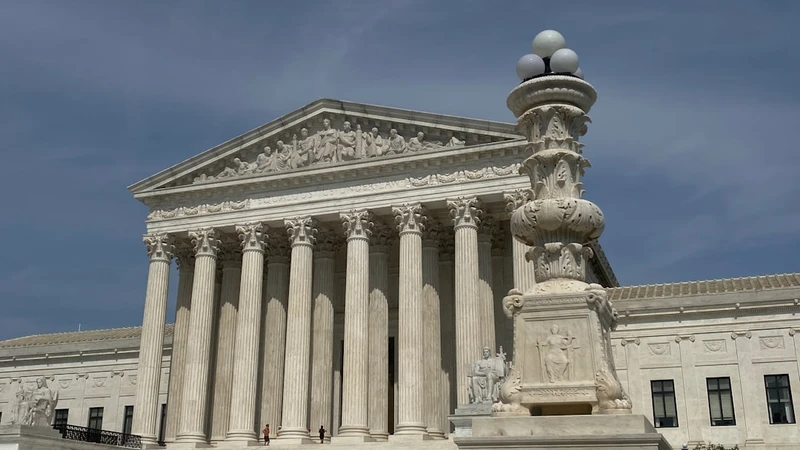
That balance is under renewed pressure because the Supreme Court has, over the last decade, moved away from an older church-state framework that often treated religion as something uniquely suspect in public programs. The Court has increasingly said that if government makes a generally available benefit open to private actors, it cannot exclude an applicant simply because it is religious. At the same time, the Court has protected private religious expression from being mistaken too quickly for government endorsement.
For conservatives, this shift is not a revolutionary innovation. It is closer to a recovery of common sense. A pluralist republic should not require citizens to check their deepest convictions at the door before entering public life. Still, a recovery of religious liberty brings its own temptations. The right lesson is not that government should become more explicitly religious. The lesson is that government should become less hostile to religion while remaining modest about its own spiritual competence.
The Supreme Court’s Recent Direction
The most important legal movement has come through cases involving public benefits and private religious actors. In Trinity Lutheran Church v. Comer in 2017, the Supreme Court held that Missouri could not exclude a church preschool from a playground resurfacing grant simply because it was operated by a church. In Espinoza v. Montana Department of Revenue in 2020, the Court said a state could not bar families from using a scholarship program at religious schools if the program was otherwise open to private schools. In Carson v. Makin in 2022, the Court reached a similar conclusion about Maine’s tuition assistance program for students in areas without public high schools.
These cases did not require states to create school-choice programs or grant programs. They said that when states do create them, religious people and institutions may not be treated as second-class participants. That distinction matters. The Court was not establishing religion. It was refusing to penalize religious status.
A parallel development came in Kennedy v. Bremerton School District in 2022, where the Court sided with a public high school football coach who prayed at midfield after games. The decision was controversial, in part because public schools are a sensitive setting. Children are impressionable, and government authority can be felt strongly even when it is not formally exercised. But the Court’s broader point was that a public employee does not lose all rights to personal religious expression simply by working for the state.
Then, in Groff v. DeJoy in 2023, the Court clarified the standard for religious accommodations in the workplace under federal civil rights law. The ruling made it harder for employers to deny accommodations by claiming only minimal burdens. That case was not about school prayer or public funding; it was about the ordinary dignity of workers who ask not to be forced into needless conflict with conscience.
What the Constitution Permits—and What Prudence Requires
There is a difference between what the Constitution permits and what public wisdom recommends. This is where both left and right tend to fail, though in different ways.
Many secular progressives still speak as if religious neutrality means religious absence. But a state that allows environmental clubs, ethnic associations, veterans groups, and ideological nonprofits to participate in public programs does not become neutral by excluding churches, synagogues, mosques, or religious schools. It becomes discriminatory. The public square is not a chemistry lab. It is a human place, and human beings arrive there with beliefs about God, justice, duty, and the good life already in their pockets.
At the same time, some conservatives mistake legal permission for cultural wisdom. A city council may be legally able to open with prayer in certain circumstances. A governor may speak freely about his faith. A school board may defend the religious liberty of students. But not every public religious gesture is equally prudent, and not every assertion of Christian identity strengthens Christianity.
Here the older conservative instinct should matter: government is a blunt instrument. It can protect space for faith, but it cannot produce faith. It can keep the door open, but it cannot make anyone walk through it with sincerity. When public officials use religion mainly to signal tribal membership, they do not elevate politics. They reduce religion.
The Policy Stakes for Schools and Public Programs
The largest practical battles will likely involve education. School choice, charter schools, religious schools, curriculum disputes, parental rights, and student expression all converge on one question: Who has authority over the moral formation of children?
Conservatives should defend parental authority and equal access for religious families without pretending that every hard question has an easy answer. Public schools serve children from many faiths and from no faith. They should not become vehicles for official devotion. But neither should they treat traditional religious beliefs as embarrassing relics to be corrected by professionals. A public school that celebrates every identity except religious identity is not neutral. It is catechizing in another creed.
In public funding, the cleanest principle is equal treatment. If a program is open to private organizations serving a public purpose, religious organizations should be eligible on the same terms, provided public money is used consistently with the program’s rules and basic legal safeguards. That approach does not privilege religion. It recognizes that religious charities, schools, hospitals, and service groups have long been part of America’s civic architecture.
In schools, the principle should be neither coercion nor censorship. Students may pray, form religious clubs, and express religious views under the same rules that apply to comparable secular expression. Teachers and administrators, because they speak with institutional authority, face tighter limits during instructional time. That distinction is not anti-religious. It protects the liberty of families while allowing private faith to breathe.
A Better Settlement Than Culture-War Victory
The American settlement on religion has never been pure secularism. It has been ordered liberty: no national church, no religious test for office, broad freedom of worship, and wide space for religious argument in public life. The civil rights movement, abolitionism, and many campaigns for social reform drew deeply from religious conviction. To declare such arguments illegitimate today would be to misunderstand the country’s own moral history.
Still, religious conservatives should resist the fantasy that a friendlier judiciary or a stronger political coalition can repair the deeper problem of unbelief. Law can stop discrimination. It can punish coercion. It can protect conscience. But it cannot make a bored, distracted, consumer society spiritually serious.
The proper role of faith in the public square is therefore both robust and restrained. Robust, because believers are citizens and their convictions are not private hobbies. Restrained, because the state is not the church, and because forced reverence is not reverence at all.
America does not need a government that pretends religion is dangerous whenever it leaves the sanctuary. Nor does it need politicians who treat God as a campaign surrogate. It needs a constitutional culture mature enough to see that religious liberty is not a concession to believers. It is one of the conditions of a free society. And it needs believers wise enough to know that the faith is most persuasive when it is proposed, embodied, and lived—not merely posted on a wall or proclaimed from a podium.