The uneasy line between preaching and campaigning
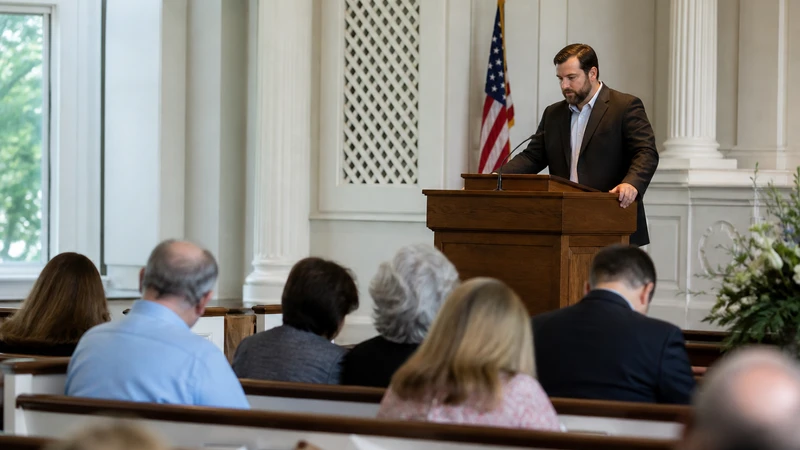
There are few places where American law becomes more delicate than at the edge of the pulpit. A minister can preach about abortion, poverty, immigration, war, religious liberty, crime, marriage, or the dignity of work. He can describe these matters as moral emergencies. He can even urge his congregation to vote with those teachings in mind. But if he says, in the official setting of the church, that the congregation should vote for or against a named candidate, he may have crossed a legal line that has shaped religious political speech for seven decades.
That line is known as the Johnson Amendment, a 1954 change to the federal tax code associated with then-Sen. Lyndon B. Johnson. It applies not only to churches, but to all organizations exempt from federal income tax under section 501(c)(3): charities, schools, religious ministries, private foundations, and many nonprofit organizations. In exchange for that preferred tax status, these groups may not participate or intervene in political campaigns on behalf of, or in opposition to, candidates for public office.
The rule has returned to public debate because religious leaders and lawmakers continue to argue over whether it protects civil society from partisan capture or chills the free speech of clergy. As with many disputes involving religion and politics, the loudest arguments often miss the more interesting problem. The question is not whether faith has anything to say about politics. Of course it does. The question is whether the church should become one more campaign vehicle, and whether the federal government should be trusted to decide when it has.
What the Johnson Amendment actually allows
The Johnson Amendment is often described as a gag order on churches. That is too simple. Under IRS guidance, 501(c)(3) organizations may speak about public policy, teach moral principles, conduct nonpartisan voter registration, distribute neutral voter guides, host candidate forums under fair conditions, and encourage civic participation. Houses of worship may also take positions on ballot measures, though that can raise separate lobbying issues depending on the activity and the organization.
What they may not do, using the resources and official voice of the tax-exempt institution, is endorse a candidate, oppose a candidate, donate to a campaign, or otherwise intervene in a candidate election. A pastor speaking personally as a citizen retains his First Amendment rights. A church newsletter, official service, ministry website, or organizational bank account is different.
This distinction sounds clean in a legal memo. It is harder in actual religious life. A sermon on the sanctity of unborn life during a Senate race in which abortion is central may be deeply political without being technically partisan. A homily on welcoming the stranger may sound like a critique of one party's immigration platform. A rabbi warning against antisemitism, a Black pastor preaching on civil rights, or a Catholic bishop defending religious liberty may all shape how believers vote without naming a candidate.
That is not a loophole. It is the nature of moral speech. Religion, if it is serious, cannot be confined to private sentiment. It makes claims about justice, obligation, mercy, and truth. A faith that never touches public life is not moderation; it is often domestication.
Rare enforcement, real uncertainty
In practice, the IRS has rarely revoked a church's tax-exempt status over partisan campaign activity. The best-known case is Branch Ministries v. Rossotti, decided by the D.C. Circuit in 2000, after a church placed newspaper advertisements opposing Bill Clinton in the 1992 presidential election. The court upheld the revocation of the church's tax exemption.
That rarity cuts both ways. Supporters of the current law argue that the Johnson Amendment is a guardrail, not a muzzle, and that churches have broad room to speak about moral and public issues. Critics answer that a law need not be frequently enforced to chill speech. If clergy do not know where the boundary lies, they may avoid saying what conscience requires.
The uncertainty is especially acute because churches occupy a unique place in tax law. Unlike many nonprofits, churches are not required to apply formally for recognition of exemption in order to be treated as tax-exempt, and they generally do not file the annual Form 990 that other charities file. This reflects a long American tradition of leaving churches alone as much as possible. But it also means that when disputes arise, they arrive in a fog of special rules, high stakes, and public suspicion.
The conservative case for reform
Conservatives have long been divided between two instincts. One instinct says that the government should not condition tax exemption on silence from religious leaders about candidates. If a pastor believes a candidate poses a grave moral danger, why should the IRS be empowered to threaten the church for saying so? This concern is not imaginary. A free society should be wary whenever bureaucrats are asked to judge the religious meaning of political speech.
The other conservative instinct is older and, in my view, equally serious: institutions matter. Churches are not political action committees with hymnals. They are places of worship, formation, repentance, charity, and sacrament. Their authority comes partly from not being reducible to the election cycle. If every congregation becomes a ward office, then politics has not been redeemed by religion; religion has been conscripted by politics.
Several repeal or reform proposals over the years, including versions of the Free Speech Fairness Act, have tried to loosen the rule by allowing statements made in the ordinary course of an organization's activities, so long as the organization spends little or no money beyond its usual operations. That approach has an intuitive appeal. It seeks to protect sermons, newsletters, and routine religious speech while still preventing tax-deductible charitable dollars from becoming campaign cash.
But even modest reforms would require careful drafting. If the law permits endorsements from the pulpit, wealthy donors may discover new ways to route political influence through religious and charitable institutions. The danger is not only legal abuse. It is spiritual corruption. The candidate who receives a church's blessing today may expect its obedience tomorrow.
What churches should remember
The wisest course for houses of worship is neither fearful silence nor reckless partisanship. Religious leaders should speak clearly on moral questions, teach their people how to think about public life, and resist the lazy fiction that neutrality means never offending a political constituency. They should also avoid turning worship into a rally and the altar into a stage prop.
For lawmakers, the policy goal should be narrow and constitutional: protect genuine religious speech while preserving the charitable sector from direct campaign finance abuse. The IRS should not be a theological censor. Nor should tax-exempt status become a subsidy for partisan machines.
There is a deeper issue here than tax law. A church that cannot speak to politics is too timid. A church that can speak only in politics is already captive. The Johnson Amendment debate matters because it forces religious institutions to ask what sort of public witness they are offering. Are they forming consciences, or merely delivering votes?
That distinction is not always easy for lawyers to define. But religious leaders should know it in their bones. Caesar will always welcome a blessing. The church's harder task is to tell the truth, including truths that no party especially wants to hear.