
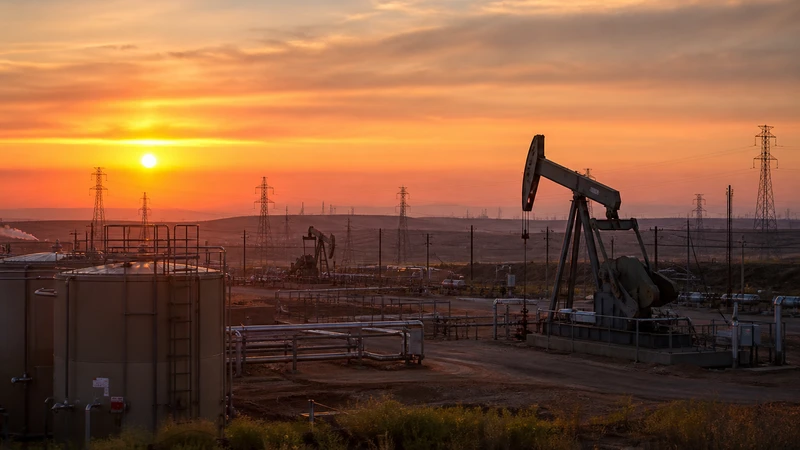
Energy Security Is Back at the Center of Policy
For several years, American energy debates have often sounded like arguments over identity. To favor more drilling was to be labeled indifferent to the climate. To favor more renewable power was to be dismissed as naïve about economics. But the world has a way of disciplining slogans. Wars, supply shocks, inflation, and the hard arithmetic of electricity demand have returned the country to an older and more serious question: How does the United States keep the lights on, keep prices stable, and keep its freedom of action in a dangerous world?
That is the practical meaning of energy independence. It does not mean America produces every barrel it consumes, in every place, at every hour. The oil market is global, and prices are shaped by events far beyond any one administration’s control. It means something more modest and more important: the United States should have enough domestic production, infrastructure, refining capacity, and strategic reserves that foreign producers cannot easily hold American households or American diplomacy hostage.
By that standard, America is in a stronger position than it was a generation ago. The shale revolution transformed the United States into the world’s leading producer of oil and natural gas. Federal data show the country has been a net exporter of total energy since 2019, a remarkable shift from the era when presidents of both parties spoke anxiously about dependence on Middle Eastern crude. Liquefied natural gas exports have also made the United States a more important supplier to allies, especially in Europe after Russia’s invasion of Ukraine exposed the danger of relying heavily on Moscow for energy.
Yet strength is not the same as security. The country still imports crude oil, in part because many refineries were built to process heavier grades than the light oil produced in large quantities from U.S. shale fields. Regional bottlenecks remain. New pipelines and transmission lines are difficult to permit and build. The Strategic Petroleum Reserve was drawn down substantially in 2022 and has been refilled only gradually. And consumers remain painfully aware that gasoline prices can rise quickly even when America is producing large volumes of oil at home.
The Policy Debate Is About Capacity
The central policy dispute is often described as fossil fuels versus renewables. That is too simple. The real question is whether America will build enough capacity of every kind to meet rising demand while reducing exposure to hostile or unstable suppliers.
Electricity demand is expected to grow as data centers, advanced manufacturing, electric vehicles, and artificial intelligence place new pressure on the grid. At the same time, older coal and nuclear plants have retired in many regions, while new generation and transmission projects face long permitting delays. Natural gas has helped reduce U.S. carbon emissions by replacing coal in power generation, but gas plants also require pipelines, storage, and regulatory certainty. Wind and solar can add power quickly in some places, but they depend on transmission, backup generation, and supply chains that often run through China.
That last point deserves more attention than it usually receives. A country can reduce reliance on foreign oil only to create new dependence on foreign minerals, batteries, solar components, and processing capacity. Conservatives are right to warn that one form of dependence should not be exchanged for another simply because it arrives under a greener label. Prudence requires domestic mining, domestic processing, and trusted supply chains with allies. It also requires honesty about trade-offs. Every source of energy has costs. The question is not whether costs exist, but whether the benefits are real and the vulnerabilities manageable.
Permitting Reform Is the Unavoidable Test
If there is one issue that should unite serious energy policymakers, it is permitting reform. America has abundant resources and impressive engineering talent, but it often struggles to build. Oil and gas projects face litigation and regulatory uncertainty. Renewable projects can be delayed by the same environmental review process that activists once defended as a check on industry. Transmission lines needed for wind and solar can take years to approve. Mines needed for critical minerals face opposition even when those minerals are essential to the clean-energy transition.
This is the contradiction at the heart of modern energy politics. Many leaders want cleaner power, cheaper power, more domestic supply, and fewer foreign dependencies. But they are less willing to accept the physical reality that all of these goals require building things: wells, pipelines, terminals, reactors, mines, factories, substations, and power lines. A politics that says yes to aspiration and no to construction is not a policy. It is a wish.
A conservative energy agenda should start with that reality. It should streamline environmental reviews without abolishing environmental responsibility. It should set firm deadlines for agency decisions. It should limit endless litigation after a project has already passed review. And it should apply these rules evenhandedly, not only to favored industries. If America needs natural gas pipelines, it also needs transmission lines. If it needs solar panels and batteries, it also needs mining and manufacturing. Seriousness means accepting the whole chain.
Oil Still Matters, Even in Transition
Some policymakers speak as though oil demand can be willed away by regulation. But oil remains central to transportation, agriculture, petrochemicals, aviation, shipping, and military readiness. Even an aggressive transition to electric vehicles would leave the economy dependent on petroleum for years. The conservative case for domestic oil production is therefore not nostalgia. It is a recognition that a modern economy cannot be governed by pretending tomorrow has already arrived.
Domestic production also carries strategic value. When the United States produces more oil and gas, it gives itself and its allies more options. It weakens the leverage of authoritarian energy exporters. It supports high-wage jobs in states that are often far from the cultural centers where energy policy is debated. And it generates tax revenue for public services. None of this means production should be careless or unregulated. It means that production here, under American law and environmental standards, is generally preferable to production in countries with weaker rules and hostile interests.
At the same time, conservatives should resist the temptation to treat energy independence as a license for complacency. The goal is not simply to drill more, but to make the country more resilient. That includes nuclear power, which offers reliable carbon-free electricity but has been burdened by cost, regulation, and public mistrust. It includes geothermal development, advanced grid technology, and storage. It includes efficiency, which is sometimes mocked but can reduce pressure on families and infrastructure. A mature energy policy is not a bumper sticker. It is a portfolio.
A Conservative Standard: Abundance With Responsibility
The moral dimension of this debate is easy to miss because energy policy is usually discussed in technical language. But energy is one of the foundations of human flourishing. Affordable power heats homes, preserves food, moves goods, runs hospitals, and makes modern work possible. When energy becomes scarce or expensive, the poor suffer first. A politics that forgets this, whether in the name of ideology or environmental purity, becomes detached from the people it claims to serve.
At the same time, stewardship is not a liberal invention. A conservative who believes in inheritance should care about the land, air, and water passed to the next generation. The difference is that stewardship must be joined to realism. The world will not be made cleaner by forcing production overseas, empowering adversaries, or making energy so expensive that voters revolt against every reform.
The better path is abundance with responsibility: produce more at home, build infrastructure faster, diversify the grid, restore strategic reserves, strengthen allied supply chains, and tell voters the truth about costs. Energy independence is not isolationism. It is the material basis for national confidence. A country that can power itself is freer to defend its interests, aid its friends, and make moral choices without first asking permission from those who sell it fuel.
In that sense, the energy debate is about more than gasoline prices or kilowatt-hours. It is about whether America still knows how to provide for itself. The answer should be yes. But yes will require not just resources beneath our feet, but seriousness in our politics.
