
Washington Turns to Civil Rights Law as Campuses Face Antisemitism Crisis
There is a familiar pattern in American higher education: A crisis arrives, university leaders issue careful statements, committees are formed, and everyone waits for the semester to end. The surge of antisemitism on campuses after the Oct. 7, 2023, Hamas attack on Israel has strained that habit to the breaking point.
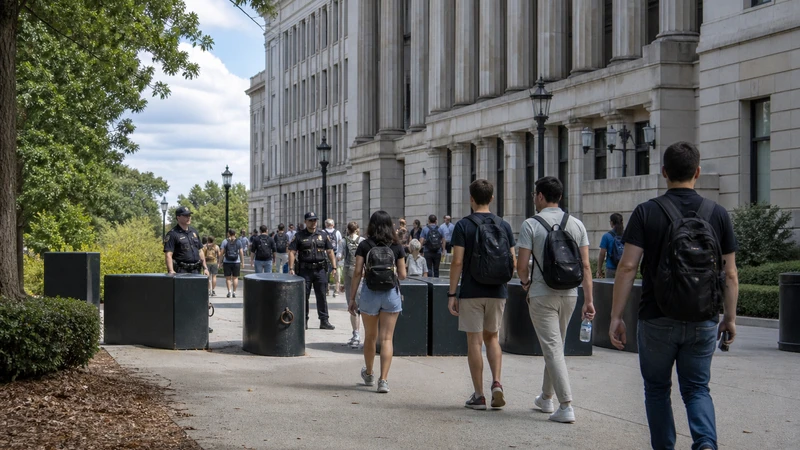
For Jewish students at a number of elite and public universities, the question has not been abstract. It has involved whether they can walk to class without being harassed, whether campus groups may exclude Zionist students from ordinary civic life, whether dormitories and libraries remain governed by normal rules, and whether administrators will enforce policies when the target is a minority whose vulnerability does not fit the preferred ideological script.
That is why the policy debate in Washington has moved beyond rhetoric. Congress, the Department of Education, state officials, and private litigants have all turned toward the tools of civil rights enforcement. The challenge is to use those tools rightly: firmly enough to protect students, but carefully enough not to turn the federal government into a speech police force.
The Legal Framework: Title VI and Jewish Students
The main federal lever is Title VI of the Civil Rights Act of 1964, which bars discrimination based on race, color, or national origin in programs receiving federal funds. Although religion itself is not listed in Title VI, federal civil rights officials have long treated Jewish, Sikh, Muslim, and other students as protected when they face discrimination based on shared ancestry or ethnic characteristics.
That distinction matters. A student criticizing Israel’s government, even harshly, is ordinarily engaging in protected speech. A student blocking Jewish classmates from campus spaces, threatening them, vandalizing Jewish institutions, or creating a hostile environment tied to Jewish identity may trigger civil rights obligations. The law is not supposed to decide foreign policy. It is supposed to ensure that American students are not treated as fair game because of who they are.
The Department of Education’s Office for Civil Rights opened multiple investigations into colleges and universities after Oct. 7, examining complaints involving antisemitism and anti-Muslim or anti-Arab discrimination. That dual focus is important. A conservative defense of civil rights cannot be tribal. If the rule is real, it protects the unpopular student as well as the sympathetic one.
Congressional Pressure and the Free Speech Problem
Congress has also pressed universities, most visibly through hearings in late 2023 and 2024 that exposed how some presidents struggled to give plain answers about whether calls for genocide against Jews violated campus policies. Those hearings were not subtle political theater; they were designed to embarrass. But they also revealed a deeper institutional confusion.
Many universities have spent years building elaborate systems to regulate speech that offends favored constituencies. Yet when Jewish students asked for similar seriousness, administrators suddenly rediscovered procedural caution and free-expression principles. The inconsistency was glaring. It suggested that some schools were not defending liberty so much as rationing protection according to politics.
Still, conservatives should resist the temptation to solve campus illiberalism with an equally illiberal federal response. The House passed the Antisemitism Awareness Act in 2024, a bill that would direct the Education Department to consider the International Holocaust Remembrance Alliance definition of antisemitism when reviewing Title VI cases. The IHRA definition has value, especially in identifying cases where anti-Israel activism crosses into classic antisemitic tropes. But any legal use of such a definition must be bounded by the First Amendment. Bad arguments about Zionism should be answered, not banned. Threats, discrimination, and targeted harassment should be punished.
This is the line policymakers must hold. A university is not required to protect students from every ugly opinion. It is required to protect them from being denied equal access to education.
What Universities Can Do Without Waiting for Washington
Much of the needed reform does not require a new federal statute. It requires adults in authority to govern.
- Enforce time, place, and manner rules. Peaceful protest belongs on campus. Encampments that seize common spaces, disrupt classes, or intimidate students do not become sacred because they use moral language.
- Apply conduct codes evenly. If harassment rules apply when one minority group is targeted, they should apply when Jews are targeted. Selective enforcement destroys trust.
- Protect institutional neutrality. Universities need not issue moral declarations on every world event. The more they speak as political actors, the harder it becomes to govern as educational institutions.
- Support Jewish student life. Security for Hillel centers, clear reporting systems, and rapid responses to threats are not favors to one community. They are basic duties.
- Teach rather than perform. Students should learn the history of antisemitism, the Holocaust, Zionism, Palestinian nationalism, and the Middle East conflict with seriousness instead of slogans.
The deepest problem on campus is not only that some students have absorbed radical politics. Young people have always been drawn to moral melodrama. The more troubling fact is that many universities seem uncertain about their own authority. They can manage bureaucracies of enormous complexity, but they hesitate to say that mobs do not get to run libraries, that threats are not arguments, and that Jewish students are not proxies for a foreign government.
The Conservative Case for a Measured Federal Response
An institutional conservative approach begins with a simple premise: Civil rights law should be enforced, but it should not be endlessly expanded to serve every political demand. Washington should require universities that receive federal funds to investigate credible complaints, punish discriminatory conduct, and maintain safe access to education. It should also respect the constitutional limits that make American universities different from ministries of instruction in authoritarian states.
That means federal agencies should look for evidence: patterns of ignored complaints, failure to discipline threats or vandalism, exclusion from campus programs, and administrative double standards. They should not punish a university merely because its students say foolish or even repellent things. The answer to a bad chant is often a better argument. The answer to a blocked classroom door is discipline.
States also have a role, especially at public universities. Governors and trustees can demand neutral enforcement of rules, review diversity bureaucracies that may have neglected antisemitism, and insist that public campuses remain open to all students. But they should avoid turning universities into partisan trophies. The purpose is not to make the campus right-wing. It is to make it governable again.
A Test of Moral Seriousness
Antisemitism has always been a kind of spiritual fever, a sign that a culture is losing its grip on reality. It turns a small and historically persecuted people into an all-purpose explanation for disorder. In the modern university, it often dresses itself in the language of liberation, as though old hatreds become new when printed on activist posters.
But the answer cannot be panic. The answer is moral clarity joined to legal restraint. Jewish students should not have to beg for the protections other groups rightly expect. Universities should not need congressional humiliation to enforce their own rules. And conservatives, if they believe in ordered liberty, should insist on both halves of that phrase.
Order without liberty becomes coercion. Liberty without order becomes permission for the strongest faction to dominate the weak. The campus antisemitism crisis is testing whether American institutions still know the difference. Washington can help. But the first duty belongs to the universities themselves: to remember that education is not mob management, and that a community unable to protect its Jewish students has failed a very old and very basic test.