The New Pressure Point in the Free Speech Debate
There is an old temptation in democratic government: if officials cannot legally command a private institution to do something, they may try to make the institution understand what would be wise, prudent, or safe. Sometimes this is ordinary governing. Sometimes it becomes something darker.
That gray zone is where the debate over government pressure on social media platforms now lives. The legal term often used is “jawboning” — official persuasion that stops short of formal regulation. But the word can sound too harmless. A friendly call from a federal health agency is one thing. A warning from a powerful regulator, backed by the implied threat of investigation, funding loss, or antitrust action, is another.
In recent years, this issue has moved from academic seminars into the center of American politics. The disputes have touched COVID-19 claims, election misinformation, foreign influence operations, Hunter Biden laptop reporting, terrorism content, and the general problem of large technology companies deciding what Americans may easily read, share, or dispute. Conservatives have been especially alarmed, and not without reason. The modern public square is not owned by the state, but it is increasingly managed by a handful of private platforms that governments know how to influence.
What the Courts Have Said
The Supreme Court has not given public officials a blank check. In National Rifle Association v. Vullo, decided unanimously in 2024, the Court held that government officials may not use regulatory power to coerce private parties into punishing speech the government dislikes. The case involved allegations that a New York financial regulator pressured banks and insurance companies to distance themselves from the NRA. The principle was broader than the parties: government may express its views, but it may not use threats to suppress disfavored speakers by proxy.
That same year, in Murthy v. Missouri, the Court rejected a challenge to federal communications with social media platforms on standing grounds. The majority did not decide the full merits of whether federal officials had crossed the constitutional line in their contacts with platforms over misinformation. That distinction matters. The ruling narrowed the lawsuit, but it did not baptize every government-platform conversation as harmless.
The older precedent remains important as well. In Bantam Books v. Sullivan in 1963, the Court held that informal pressure from a state commission against distributors of books could violate the First Amendment, even when the state did not issue a formal ban. The Constitution is not so easily evaded. A raised eyebrow from the government may be trivial; a raised eyebrow from an agency with enforcement power can be a command in disguise.
The Difference Between Warning and Directing
No serious account of this issue can say that government should never speak to technology companies. Federal agencies have legitimate reasons to notify platforms about foreign disinformation campaigns, criminal activity, child exploitation, terrorist recruitment, fraud, or imminent threats to public safety. During emergencies, the government has information that private companies may lack. To pretend otherwise would be ideological purity at the expense of common sense.
But the hard question is not whether government may speak. It is how government speaks, and with what consequences attached.
A constitutional line begins to appear when officials move from providing information to demanding outcomes. It is one thing for the FBI to alert a company to a suspected foreign influence operation. It is quite another for government actors to repeatedly press platforms to remove lawful domestic speech, flag specific accounts for action, or imply that failure to comply could bring punishment from Congress, regulators, or prosecutors.
This distinction is not merely legalistic. It is moral and institutional. A healthy republic depends on citizens being able to argue, err, correct one another, and distrust official narratives when those narratives deserve distrust. The government cannot be the national editor of disputed reality.
Why Conservatives Are Right to Worry
Conservatives have often described the social media problem as “censorship.” Critics respond that private companies have their own First Amendment rights and may moderate content as they choose. Both statements can be true, which is why this debate is so difficult.
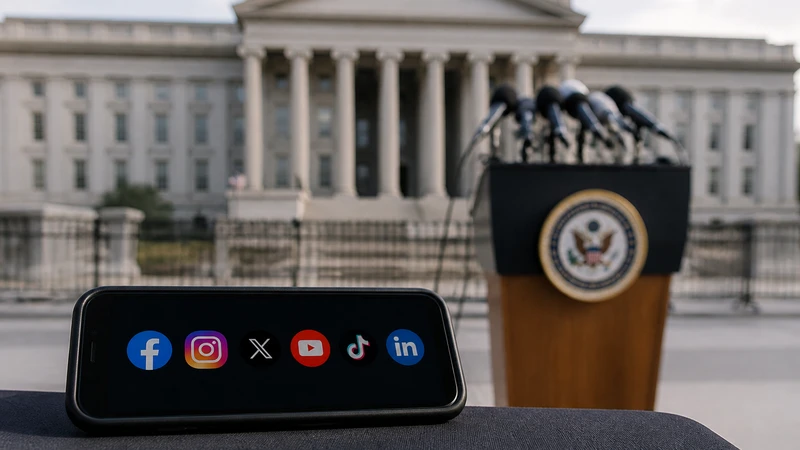
Facebook, X, YouTube, TikTok, and other platforms are not the government. They may set rules, label posts, remove content, and ban users under their terms of service. But when public officials pressure those companies to reach the government’s preferred result, private moderation can become state-influenced suppression. The government does not need to seize the printing press if it can persuade the printer that disobedience will be costly.
Conservatives remember that many claims once dismissed as misinformation later became at least arguable, complicated, or worthy of investigation. The pandemic years are the clearest example. Public health authorities faced a fast-moving crisis, but official confidence sometimes outran the evidence. In such moments, dissent is not a luxury good. It is one of the ways a society discovers its mistakes.
There is a deeper danger too. Once government develops a habit of leaning on platforms for “good” reasons, the habit will not remain confined to the good reasons. Every administration believes its opponents are irresponsible. Every party thinks some kinds of speech are dangerous. The weapon built to control one set of alleged falsehoods will eventually be inherited by people with a different list.
A Better Policy Path
The answer is not to forbid all contact between officials and technology companies. That would be impractical and, in some cases, reckless. The better answer is transparency, limits, and accountability.
- Clear rules for agency contacts: Federal departments should have written policies distinguishing alerts about unlawful or foreign activity from requests involving lawful domestic political speech.
- Public reporting: Agencies should disclose, with appropriate national security exceptions, regular summaries of content-related communications with major platforms.
- No implied threats: Officials should be barred from tying moderation decisions to regulatory retaliation, funding decisions, enforcement discretion, or legislative punishment.
- Record preservation: Communications between government officials and platforms on content moderation should be preserved for oversight.
- Equal concern across administrations: Congress should treat coercive pressure as dangerous whether it comes from Democrats, Republicans, health officials, law enforcement, or national security agencies.
These reforms would not solve every problem. They would not make platform moderation neutral, because no human institution is neutral in that sense. But they would restore a basic constitutional modesty: the state may speak, warn, and persuade, but it may not secretly conscript private companies into doing what the First Amendment forbids the state to do openly.
The First Amendment Needs Space to Breathe
There is a certain impatience in modern politics that treats free speech as a procedural nuisance. If the other side is spreading falsehoods, why not stop them? If bad information harms public health or election confidence, why not pressure the platforms to take it down?
The answer is that a free people cannot outsource judgment to the very officials whose claims are often at issue. The First Amendment assumes something both noble and unsettling about citizens: that they must be trusted with argument, even when argument is messy, foolish, or wrong. It is not a promise that truth will always win quickly. It is a judgment that government power is more dangerous when it is placed in charge of deciding which disputed truths may be heard.
That is why the jawboning debate matters. It is not only about Silicon Valley or Washington. It is about whether Americans will continue to live under a Constitution that protects the space between official power and private conscience. That space can be narrowed quietly, by emails, meetings, and polite requests from important people. But once narrowed, it is not easily recovered.
A republic does not need a Ministry of Truth to lose the habits of liberty. Sometimes it only needs officials who think they are helping, companies eager to avoid trouble, and citizens too exhausted to notice the difference between persuasion and pressure.