Small Firms Face a Large Compliance Problem
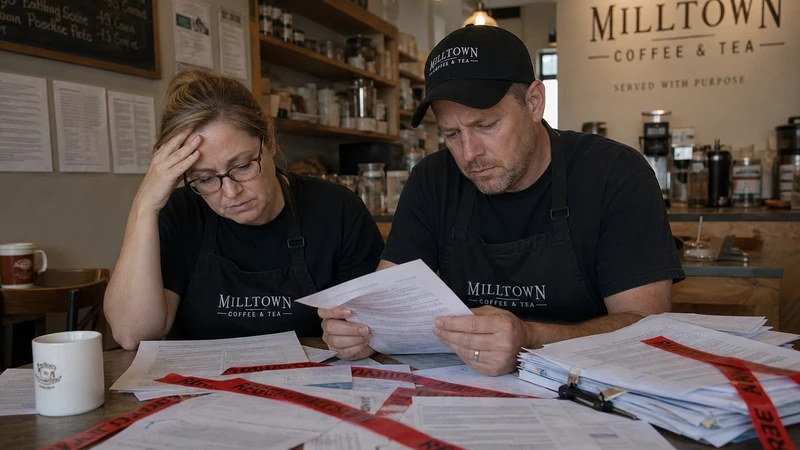
For a large corporation, a new regulation often means a longer meeting, another outside lawyer, or a software update. For a small business, it can mean a Saturday at the kitchen table, a delayed hire, or the owner’s spouse learning payroll law after the children have gone to bed.
That difference matters because American small businesses are not just smaller versions of big businesses. They are often family operations, local employers, neighborhood fixtures, and, in many communities, expressions of religious duty as much as economic ambition. A Christian bookstore, a Catholic school, a church-run daycare, a kosher bakery, a faith-based counseling practice, or a contractor whose business grew out of a parish network may all be formally private enterprises. But socially, they often function as part of the moral infrastructure of a town.
The growing complaint from many such owners is not that they should be exempt from all rules. Most understand the need for wage standards, food safety, fire codes, nondiscrimination law, child protection, and honest accounting. The problem is accumulation. One rule may be manageable. Ten overlapping rules, written in language that seems designed for specialists rather than citizens, can become a kind of invisible tax.
The Burden Is Often Local, Not Just Federal
When conservatives talk about regulation, Washington usually gets top billing. There is good reason for that. Federal agencies can impose broad obligations on employers, from workplace standards to tax reporting to labor classification rules. The Department of Labor’s rules on independent contractors and overtime eligibility, the Treasury Department’s anti-money-laundering reporting requirements for many business entities, and federal workplace mandates have all drawn scrutiny from business groups because of their compliance costs and legal complexity.
But for the owner of a small daycare or bakery, the maze often begins much closer to home. Local zoning boards decide whether a religious school can expand. County health departments inspect kitchens. State licensing boards regulate occupations. Municipalities set signage rules, parking requirements, and permitting processes. Fire marshals, insurance rules, background-check mandates, and building codes may each have a defensible purpose. Together, they can make a simple act of service feel like a pilgrimage through offices, forms, and fees.
There is a reason large firms tend to tolerate complexity better than small ones. Complexity rewards scale. A national chain can spread compliance costs across hundreds of locations. A family-owned childcare center cannot. A major employer can hire a human-resources department. A church-affiliated preschool may have a director, a bookkeeper, and a volunteer board trying to understand rules that were drafted as if every institution had in-house counsel.
Faith-Run Businesses Occupy a Sensitive Space
Faith-run enterprises face a special problem because they often sit at the boundary between commerce, ministry, and conscience. A soup kitchen may not be a business in the ordinary sense, but a thrift store that supports a ministry might be. A school may teach religion and algebra, employ lay staff, receive tuition, and answer to both parents and public regulators. A counseling service may operate under professional licensing rules while also understanding its work as a vocation.
This mixed identity does not place such institutions above the law. It does mean lawmakers should be careful about one-size-fits-all mandates. Religious liberty is not merely a private right to worship quietly on Sunday. It includes the freedom of believers to build institutions that reflect their deepest commitments. When government rules are vague, expensive, or indifferent to religious structure, they can chill not just enterprise but civil society itself.
Here the issue is not dramatic persecution. In most cases, no official is trying to drive a religious business out of existence. The more common danger is duller and therefore easier to miss: a steady narrowing of what small institutions can afford to do. A ministry decides not to start a daycare. A family declines to open a second storefront. A school postpones renovations because permitting costs are uncertain. A part-time worker is not hired because the classification rules are too risky. No headline announces the loss. The thing simply never happens.
Regulation Has a Moral Purpose — and Moral Limits
Conservatives should be honest enough to say that regulation is not inherently illegitimate. Markets require law. Customers need protection against fraud. Workers should not be exposed to reckless hazards. Children, the elderly, and the vulnerable deserve special care. A society that treats every safety rule as tyranny will soon rediscover why some rules were written in the first place.
But moral seriousness cuts both ways. It is also unjust to impose burdens whose costs fall heaviest on the people least able to absorb them. If a regulation protects the public in theory but mainly enriches consultants, entrenches incumbents, and discourages new entrants, it deserves scrutiny. If a rule is so confusing that ordinary citizens cannot understand it without professional help, then the law is failing one of its basic duties: to be knowable.
This is especially important for businesses animated by religious conviction. Such owners often accept lower margins because they see their work as service. They employ teenagers, immigrants, retirees, and people coming out of difficult circumstances. They sponsor little-league teams, donate to parish drives, and let neighbors post flyers in the window. They are not saints because they run a business. But many are trying to live out a belief that work is more than profit. Public policy should not make that harder than necessary.
What Reform Should Look Like
A serious conservative reform agenda would not simply promise to abolish agencies or slash rules by slogan. It would ask harder questions: Which rules actually protect health and safety? Which merely protect existing businesses from competition? Which reporting requirements duplicate information the government already has? Which mandates could be scaled by firm size, risk level, or revenue?
Several principles would help.
- Plain-language compliance: Small employers should be able to understand their obligations without hiring a lawyer for every routine decision.
- Small-business impact review: Agencies and local governments should measure how rules affect small firms, not just assume costs can be absorbed.
- Safe harbors for good-faith compliance: Owners who make reasonable efforts to follow complex rules should not face the same penalties as bad actors.
- Sunset review: Regulations should be revisited periodically to determine whether they still serve a real public purpose.
- Respect for religious structure: Rules affecting faith-based schools, charities, and businesses should account for religious liberty and institutional mission.
None of this requires romanticizing small business. Small firms can violate rules, mistreat workers, or cut corners like anyone else. But the remedy for wrongdoing should be enforcement against wrongdoing, not a compliance regime that assumes every corner bakery or church preschool has the administrative capacity of a multinational corporation.
The Question Behind the Paperwork
Every regulatory debate eventually becomes a debate about trust. Do we trust families, congregations, and local entrepreneurs to build useful institutions? Or do we assume that every human activity must first pass through a bureaucratic filter before it becomes legitimate?
A healthy society needs both law and liberty. It needs inspectors, but also initiative. It needs standards, but also the small and stubborn courage of people willing to open a shop, start a school, hire a neighbor, or turn a ministry into a practical service.
The conservative case against excessive red tape is not that business owners should be left alone because commerce is sacred. It is that people are social, moral, and creative creatures, and government should leave room for them to act as such. When regulation becomes too dense, it does not merely slow the economy. It weakens the local institutions through which Americans learn responsibility, generosity, and trust.
That is a cost no agency spreadsheet is likely to capture. But on Main Street, it is real enough.