Curriculum Transparency Moves Back to the Center of Education Politics
The argument over parental rights in education is often presented as a culture-war shouting match, and sometimes it is one. But beneath the slogans is a more ordinary and more serious question: Who gets to know what children are being taught in public schools?
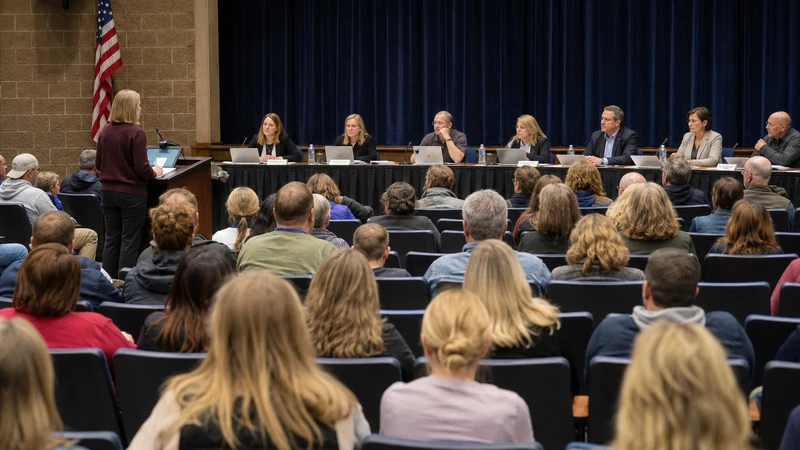
Across the country, state legislatures, school boards, and parent groups continue to debate policies requiring districts to post curriculum materials online, notify families about sensitive instruction, disclose student surveys, and create clearer procedures for reviewing library books. These measures vary widely from state to state. Some are modest transparency rules. Others reach into deeper disputes over sexuality, gender identity, race, religion, and the limits of public authority over children.
For conservatives, the issue has become one of the central education fights of the decade. But it should not belong only to conservatives. A public school is not a private club. It is funded by taxpayers, entrusted with children, and authorized by the state. That combination creates a simple presumption: parents should not have to act like detectives to understand what happens in the classroom.
The Legal and Political Background
American law has long recognized that parents have a primary role in directing the upbringing of their children. The Supreme Court affirmed that principle in cases such as Meyer v. Nebraska and Pierce v. Society of Sisters in the 1920s, and later in Troxel v. Granville in 2000. At the same time, courts have also recognized that public schools have authority to set curriculum, maintain order, and teach civic knowledge.
That tension is not new. What is new is the level of mistrust.
Federal law already gives parents some rights. The Family Educational Rights and Privacy Act, known as FERPA, generally allows parents to inspect their children’s education records. The Protection of Pupil Rights Amendment gives parents certain rights related to surveys, physical exams, and instructional materials in federally funded programs, especially when sensitive personal topics are involved. But these laws do not settle every argument over lesson plans, library shelves, teacher-created materials, or classroom discussions.
Congress has tried to enter the debate more directly. In 2023, the Republican-controlled House passed a federal Parents Bill of Rights proposal, but it did not become law. As a practical matter, most of the action remains in the states and in local school districts, where education policy has traditionally belonged.
What Parents Are Asking For
The phrase “parental rights” can mean many things, which is one reason the debate becomes so heated. In its most defensible form, it means several concrete policies:
- Online access to curriculum materials, including reading lists, major instructional resources, and course outlines.
- Advance notice for sensitive instruction, especially sex education or lessons involving personal beliefs and family matters.
- Clear opt-out procedures where state law permits them.
- Transparent library review policies that distinguish between age-appropriate concerns and simple disagreement with a book’s viewpoint.
- Disclosure of student surveys that ask about religion, politics, sexuality, mental health, or family life.
None of these requests requires a war against teachers. In fact, the best transparency rules can protect teachers by replacing suspicion with process. A parent who can see the syllabus is less likely to assume the worst. A teacher who can point to an approved curriculum is less likely to be accused of freelancing an ideological mission.
Transparency is not censorship. It is the normal condition of public accountability.
Where the Debate Goes Wrong
Still, conservatives should be honest about the risks. Some activists use “parental rights” as a phrase large enough to cover almost any objection to any book, lesson, or teacher. A public school cannot function if every parent receives a personal veto over every assignment. The classroom would become not a place of learning but a parliament of grievances.
There is also a difference between age-appropriateness and viewpoint avoidance. A high school course in American history should be able to teach slavery, Jim Crow, religious conflict, immigration, war, and political radicalism without pretending that every difficult subject is an assault on children. The purpose of education is not to keep students innocent of reality forever. It is to introduce them to reality in an ordered and humane way.
But progressives have their own temptation here, and it is at least as damaging. Too often, parental concern is dismissed as ignorance or bigotry before it is even heard. This is a serious mistake. Most parents are not trying to burn down the library. They are trying to understand why institutions they fund and rely upon sometimes seem evasive about what they teach.
When school officials tell parents, in effect, “trust us, but do not ask too many questions,” they should not be surprised when trust collapses. Trust is not a magic substance stored in institutional walls. It is earned through candor, humility, and a willingness to answer reasonable questions.
Public Schools Need Public Confidence
The policy challenge is to write rules that are broad enough to give parents real visibility, but not so clumsy that they bury teachers in paperwork or turn every school board meeting into a trial. A well-designed transparency law should focus on materials actually used for instruction, provide reasonable timelines for posting information, protect student privacy, and leave room for teachers to make ordinary professional adjustments.
Library policy requires similar care. Districts should have public selection standards, age-level guidance, and a review process that includes parents, educators, and administrators. But review should not mean automatic removal. Nor should librarians be treated as enemies of the family. The question is not whether books may contain difficult material. The question is whether particular material belongs in a particular setting for particular ages.
The same principle applies to social and emotional learning, counseling programs, and surveys. Schools do have a legitimate interest in student well-being. But the more a school asks children to disclose intimate information about themselves or their families, the stronger the case for parental notice and consent becomes.
A Conservative Case for Openness
At its best, the conservative argument here is not anti-education. It is pro-institution, properly understood. Institutions survive when they respect the limits of their authority. The family is not a subcontractor of the school system. The school is, in important ways, a servant of the family and the public.
This does not mean every parental demand is wise. It does mean the first posture of a public school toward parents should be openness rather than defensiveness. A curriculum that cannot be shown to parents is already in trouble, even if its content is harmless. Secrecy gives ordinary disagreement the atmosphere of conspiracy.
There is an old moral lesson here, one that applies beyond education. Authority is most legitimate when it is least afraid of being seen. Public schools ask parents to hand over what they love most for seven hours a day. The least they can offer in return is a clear window into the room.