
Affordability Moves to the Center of Post-Midterm Politics
The midterms may have settled the question of who holds which seats, but they did not settle the question that followed voters into the grocery aisle, the insurance office, the gas station, and the mortgage lender: Why does ordinary life still feel so expensive?
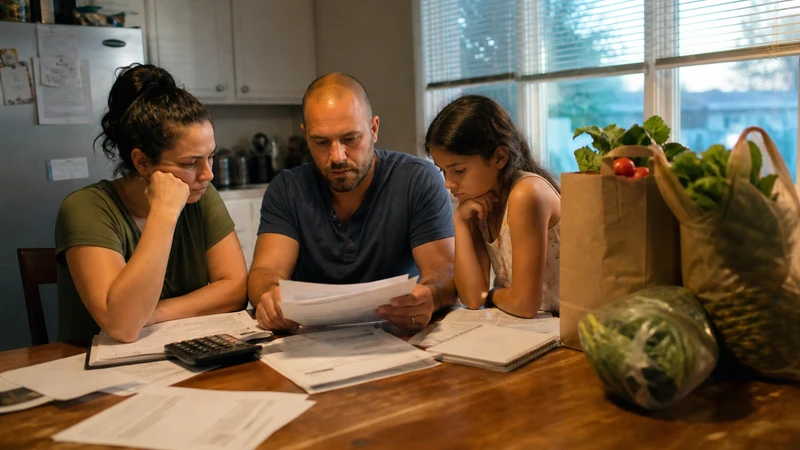
That question is now one of the central political problems facing both parties. Inflation has cooled from the punishing surge that followed the pandemic, but the lived experience of inflation is not the same as a monthly government report. Families do not experience prices as a line on a chart. They experience them as the moment when the grocery total is higher than expected, the rent increase arrives, the car insurance premium jumps, or a first-time homebuyer discovers that higher interest rates have turned a modest house into an unreachable one.
This is the political difficulty for Washington. Officials can say, accurately, that the rate of price increases has slowed. Voters can reply, also accurately, that the new price level remains painful. In politics, the second sentence often matters more than the first.
A Problem Neither Party Can Easily Own
For Democrats, affordability is a governing problem. The party has often leaned on programs, subsidies, tax credits, and industrial policy to soften the pressures facing households. Some of those policies may help specific families or industries. But voters who are worried about broad household costs are not easily persuaded by a list of targeted benefits. They ask whether the overall cost of living is becoming manageable again.
For Republicans, affordability is an opportunity, but also a test. It is not enough to say that inflation was caused by excessive spending, though pandemic-era fiscal policy and later federal outlays are plainly part of the debate. Republicans must show that they have a serious agenda for lowering costs, not merely a vocabulary for blaming them on the other side. A party that talks about working families has to speak concretely about housing, energy, health care, debt, and wages.
The danger for both parties is that affordability becomes another campaign slogan, like an old coin passed from hand to hand until the markings are worn away. Everyone says they are for cheaper groceries, lower rents, and more take-home pay. The hard question is what trade-offs they are willing to accept to get there.
The Household Budget Is the Real Battleground
The affordability squeeze is not a single problem. It is several problems arriving at once.
Housing remains perhaps the most visible. In many parts of the country, home prices rose sharply in the years after the pandemic, while mortgage rates climbed from the unusually low levels that many Americans had come to treat as normal. Renting has not offered a simple escape, especially in growing metropolitan areas where supply has failed to keep up with demand. Zoning restrictions, permitting delays, labor costs, materials costs, and local resistance to new development all matter here.
Food prices have become another symbol of frustration. Even when the pace of food inflation moderates, shoppers remember the old total at the checkout counter. The family budget has a memory, and it is not easily talked out of what it knows.
Insurance costs, especially for homes and cars, have also become harder to ignore. Weather risk, repair costs, litigation, theft, and state-level regulation all play roles in different markets. The result is that households can feel punished for necessities they cannot simply abandon.
Energy remains a recurring pressure point. Conservatives are right to argue that reliable and abundant energy is a foundation of affordability. A country that makes energy production needlessly difficult should not be surprised when families pay more to heat, cool, and move through daily life. At the same time, energy markets are global, and no president can command gasoline or electricity prices by wishing them lower. Policy matters, but humility matters too.
What a Serious Affordability Agenda Would Include
A serious post-midterm affordability agenda should begin with the old conservative insight that prices are signals, not moral rumors. When housing is too expensive, the first question should be whether we are allowing enough housing to be built. When energy is costly, the first question should be whether we are permitting enough production and infrastructure. When health care is expensive, the first question should be whether competition, transparency, and patient choice are being suppressed by systems built for insiders.
There are several areas where lawmakers could act without pretending that Washington can repeal scarcity by decree:
- Housing supply: Congress cannot rewrite every local zoning code, but federal transportation, housing, and infrastructure dollars can be tied more carefully to local willingness to permit new construction. States and cities will still make the key decisions, but federal policy should reward building rather than bottlenecks.
- Energy permitting: Faster, clearer approval for pipelines, transmission lines, export facilities, nuclear projects, and domestic production would help restore the link between abundance and affordability. Environmental review should protect the public interest, not function as a permanent veto.
- Fiscal restraint: If politicians want lower inflationary pressure, they must rediscover the habit of saying no. Deficits do not explain every price increase, but a government that borrows as if limits do not exist should not be shocked when voters lose confidence in its economic stewardship.
- Health care competition: Price transparency, site-neutral payments, broader insurance choice, and competition against hospital consolidation deserve more attention than they receive. Health care is one of the great household expenses that politics often discusses only in abstractions.
- Work and family policy: A pro-family affordability agenda should care about wages, child care, education costs, and taxes. The family is not just a private lifestyle choice. It is the basic institution through which economic anxiety is either absorbed or transmitted.
The Moral Dimension of Affordability
There is a temptation in political journalism to treat household expenses as a purely technical issue, a matter for economists, budget offices, and central bankers. It is partly that. But it is also a moral and social issue.
A society in which young couples cannot imagine buying a home, parents cannot see a path to raising several children, and older Americans fear that fixed incomes will not keep pace with basic costs is a society placing strain on more than wallets. It is placing strain on hope.
That does not mean every expensive thing is unjust, or that every complaint should become a federal program. Conservatives, especially, should resist the fantasy that government exists to remove all difficulty from life. But we should also resist the colder fantasy that economic pressure has no spiritual or civic consequences. People who feel permanently squeezed become less generous, less patient, and less trusting. Eventually they begin to suspect that the whole system is arranged for someone else.
The Post-Midterm Test
The parties now face a simple but demanding test. Democrats will need to show that their answer to high costs is not merely more public money chasing the same limited supply. Republicans will need to show that their answer is not merely nostalgia for a cheaper past, but a governing program that expands production, competition, and family formation.
The voters have already rendered one verdict: affordability is not a side issue. It is the table on which the rest of politics is being set. Culture, foreign policy, immigration, and institutional trust all matter. But for many households, the first political fact is still the monthly bill.
Washington often prefers arguments that can be won with speeches. Affordability will not be won that way. It will be won, if at all, by the slower work of removing barriers, disciplining budgets, encouraging production, and remembering that a nation is not prosperous merely because its statistics improve. It is prosperous when ordinary families can look at the future and believe, with some reason, that they can afford to live in it.