Big Tech’s Speech Power Is Back at the Center of Politics
The argument over online speech has never really gone away. It merely changes costumes. One year the subject is election misinformation, another year pandemic claims, another year foreign propaganda, and another year whether a conservative account was suspended for saying what millions of Americans already believed.
But beneath these arguments is a more durable question: Who governs the digital public square? Is it the companies that built the platforms, the users who supply their value, the advertisers who fund them, or the state officials who increasingly treat them as instruments of public policy?
For conservatives, the answer cannot simply be that private companies may do whatever they like. That is too thin an answer for institutions whose decisions can shape elections, reputations, news distribution, religious debate, and public trust. But neither can the answer be that government should force platforms to carry whatever speech politicians prefer. That is not conservatism. It is the old temptation of power wearing a new red hat.
The Evidence of Distrust
Conservative distrust of Big Tech did not arise from nowhere. Major platforms have removed, labeled, downranked, or restricted posts on subjects that later became legitimate matters of public debate, including Covid policy, school closures, and stories touching national politics. The 2020 controversy over distribution of reporting about Hunter Biden’s laptop became, for many on the right, the emblem of a broader problem: a small number of technology executives, operating under opaque rules, can throttle a politically important story at precisely the moment voters are paying attention.
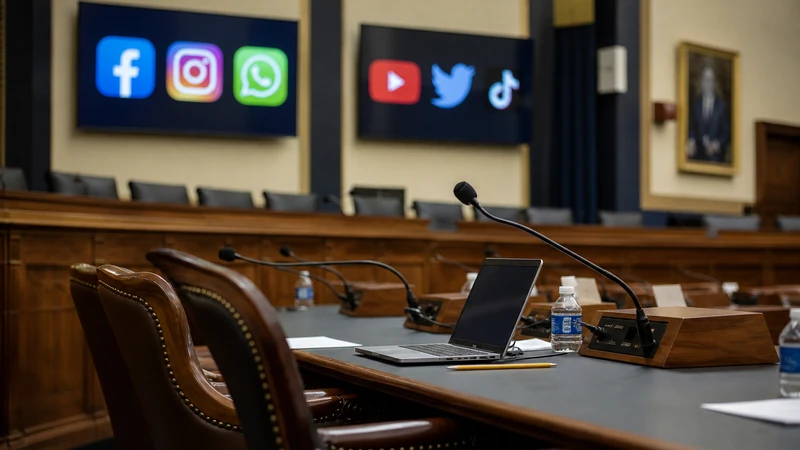
Platforms respond that they are dealing with impossible scale. Facebook, YouTube, X, TikTok, Instagram, and other services process vast quantities of content every day. They face real problems: fraud, harassment, child exploitation, foreign influence operations, terrorist recruitment, and algorithmic amplification of falsehoods. No serious person should pretend that moderation is optional. A platform with no rules quickly becomes unusable, and users usually demand some kind of order even when they dislike the moderators.
The dispute, then, is not whether moderation should exist. It is whether moderation has become a form of ideological management, and whether the people doing it are accountable to anyone outside their own corporate and cultural circles.
What the Supreme Court Has Already Signaled
The constitutional terrain is difficult, and conservatives should be honest about that. The First Amendment limits government, not private editorial judgment. A newspaper cannot be forced to print a letter from the governor. A parade organizer cannot be required to carry a message that changes the meaning of the parade. The Supreme Court has long recognized that curation itself can be expressive.
That principle matters for social media, even if platforms are not newspapers in the old sense. In 2024, the Supreme Court considered challenges involving state laws from Texas and Florida that sought to regulate large platforms’ moderation practices. The Court did not simply bless the laws. It emphasized that platforms can have First Amendment interests when they organize, rank, and present speech, and it sent the cases back for more careful analysis.
In another 2024 case, Murthy v. Missouri, the Court rejected, on standing grounds, an effort to obtain an injunction against federal officials accused of pressuring platforms over content. That decision did not settle every moral or policy question about government jawboning. It did, however, remind critics that courts require concrete proof of injury and causation, not merely a general sense that federal officials behaved badly.
These rulings should restrain both sides. The left should not pretend that government pressure on platforms is harmless simply because it is framed as public health or democracy protection. The right should not imagine that every moderation decision can be converted into a constitutional violation.
The Real Danger: State-Corporate Speech Management
The most serious concern is not that a private company has rules. It is that government officials and dominant platforms may develop an informal partnership in which the state does not censor directly but strongly hints, flags, warns, and pressures until private actors do the work the Constitution would forbid the state to do openly.
This is the point at which the issue becomes more than a partisan complaint. A society that values liberty cannot be comfortable with a system where bureaucrats define dangerous speech, platforms quietly enforce the preference, and citizens have no clear process to challenge the result. The danger is not only censorship. It is mystification. People do not know who made the decision, what rule was applied, whether a human being reviewed it, or whether political pressure stood somewhere in the background.
There is something spiritually unhealthy about this arrangement as well. It trains citizens to live inside invisible fences. You may speak, but not too sharply. You may dissent, but not in a way that triggers a system whose standards are known only after punishment arrives. A free people should not be governed by hints from unseen managers.
What a Conservative Policy Should Look Like
A serious conservative approach should begin with three principles: constitutional humility, transparency, and competition.
First, government should not force viewpoint carriage in broad and clumsy ways. However satisfying it may feel to punish Silicon Valley, compelled speech is a dangerous tool. Today it may be used to protect conservatives. Tomorrow it may be used against religious institutions, pro-life organizations, or small publishers that refuse to carry messages they believe are false or immoral.
Second, government should require greater transparency where it can do so constitutionally. Large platforms should be clearer about their rules, provide meaningful notice when content is removed or restricted, and offer practical appeals for users whose accounts are penalized. Transparency is not a cure-all, but it is better than government control because it exposes power without fully transferring that power to the state.
Third, Congress should draw bright lines against coercive government pressure. Officials may criticize companies. They may share information about crimes or foreign threats. But they should not threaten regulatory retaliation unless platforms suppress lawful speech. The public deserves disclosure when federal agencies are regularly communicating with platforms about content moderation, subject to legitimate national security and law enforcement limits.
Fourth, conservatives should care about market power. A world with many platforms, open protocols, portable data, and lower barriers to entry is healthier than a world where a handful of companies mediate public argument. Antitrust law is not a magic wand, and it should not become a weapon for punishing political enemies. But competition remains one of the oldest conservative answers to concentrated power.
The Temptation to Build Our Own Censors
The right’s grievance against Big Tech is often justified. The remedy, however, must not be to create a censorship machine of our own. That is the perennial temptation in politics: We hate the ring because the wrong man wears it, and then we persuade ourselves that it would be safe on our hand.
A conservative politics worthy of the name should resist that temptation. It should defend lawful speech, insist on institutional accountability, expose government pressure, and make room for genuine pluralism online. It should also remember that private property, freedom of association, and editorial judgment are not disposable principles just because their current owners are unfriendly to us.
The digital public square is not a church, not a town hall, and not quite a newspaper. It is something newer and stranger, and our law is still catching up. But the old truths still apply. Power should be limited. Rules should be knowable. Government should not do indirectly what it cannot do directly. And a country that values free speech must protect not only the speech it likes, but the conditions under which argument can happen at all.