
All blacks apparently vote the same. It doesn’t matter if they’re rich or poor, educated or unschooled, urban or rural — if they’re black, their voting patterns are only defined by their blackness. At least that’s what they were saying in Louisiana, until the latest U.S. Supreme Court decision pulled the curtain down on “majority-minority” gerrymandering.
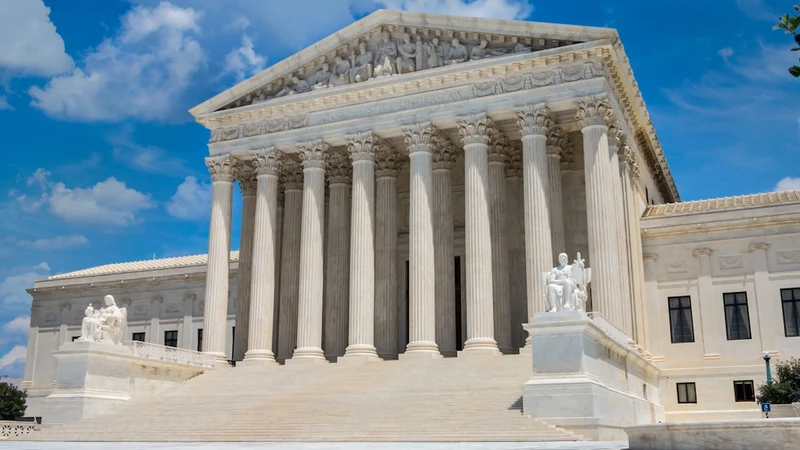
In a clear 6-3 ruling this week, the Supreme Court declared Louisiana’s SB8 map — which intentionally created a second majority-black congressional district — an unconstitutional racial gerrymander. Justice Alito’s majority opinion, joined by the court’s conservatives and with a strong concurrence from Justice Thomas (joined by Justice Gorsuch), held that Section 2 of the Voting Rights Act did not require the state to draw that extra district. Without such a requirement, there was no compelling interest to justify making race the predominant factor in map-drawing. The lower court’s decision striking the map was affirmed.
This decision directly attacks the racist stereotyping that has infected redistricting for too long. For decades, mapmakers have operated on the crude assumption that black voters (and Latino voters) form a monolithic bloc whose political preferences are dictated first and foremost, if not solely, by skin color. They have treated minority communities as predictable voting machines rather than as individuals with diverse views shaped by education, income, values, faith, and personal experience.Read More on The Federalist
